Top 5 Gymnastics Skills for Kids
Gymnastics is a foundational sport that offers a wide array of physical, mental, and social benefits for children. It helps kids develop exceptional strength, flexibility, balance, coordination, and spatial awareness. Beyond the physical advantages, gymnastics instills discipline, boosts self-confidence, and teaches children how to set and achieve goals. In this comprehensive guide, we will explore the top five gymnastics skills for kids, the benefits of each, and how children can safely learn and progress in this exciting sport.
Introduction to Gymnastics for Kids
Gymnastics is often referred to as the mother of all sports because the skills learned in gymnastics translate well into almost any other athletic endeavor. From running and jumping to swimming and playing team sports, the fundamental movement patterns developed in gymnastics provide a solid athletic base.
For young children, gymnastics classes are designed to be engaging, safe, and developmentally appropriate. They learn through play, structured exercises, and progressive skill development.
The Importance of Early Skill Development
Starting gymnastics at a young age allows children to develop fundamental movement skills (FMS) during a critical period of physical and neurological growth. These skills include agility, balance, and coordination, which are best acquired during early childhood. By mastering basic gymnastics skills, children build a strong foundation that will benefit them in all future physical activities. Furthermore, the supportive environment of a gymnastics class encourages social interaction, teamwork, and respect for others.
Top 5 Gymnastics Skills for Kids
- The Forward Roll
The forward roll is one of the very first skills a gymnast learns. It introduces the concept of rotation and spatial awareness in a safe and controlled manner. How to do it: Start in a squat position, place hands flat on the mat shoulder-width apart, tuck the chin to the chest to protect the neck, and roll gently onto the back of the neck and shoulders, pushing off with the feet to finish back in a starting position. Benefits: Develops core strength, improves flexibility in the spine, and teaches children how to land safely by rolling rather than bracing with the arms during a fall.
- The Cartwheel
The cartwheel is a classic gymnastics skill that moves the body sideways while maintaining balance and coordination. It is an excellent way to introduce the concept of weight transfer from feet to hands. How to do it: Stand tall, lunge forward with the lead leg, place the hands on the floor one after the other while kicking the legs over the head in a split position, and land one foot at a time. Benefits: Builds upper body strength, improves bilateral coordination, develops spatial orientation while being inverted, and enhances dynamic balance.
- The Handstand
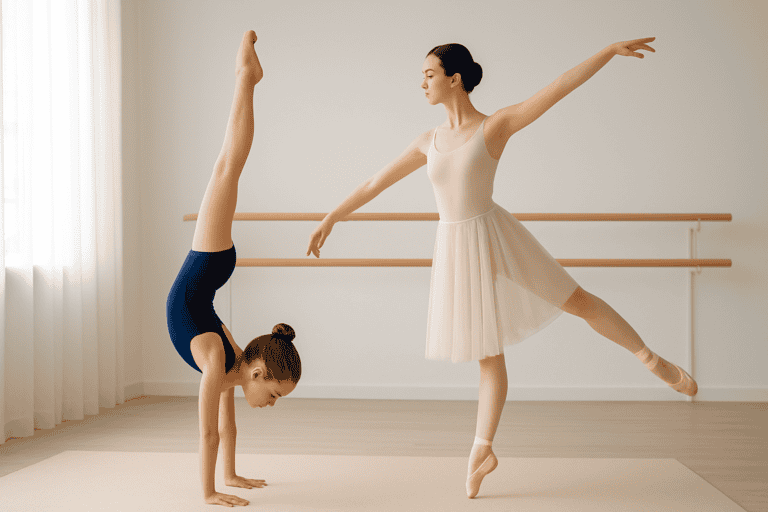
The handstand is the cornerstone of many advanced gymnastics skills. Mastering the handstand teaches body alignment and core control. How to do it: Start in a lunge, place hands flat on the floor shoulder-width apart, kick the legs up into a vertical position, engage the core to maintain a straight line from hands to toes, and maintain focus on a fixed point on the floor. Benefits: Enhances shoulder and core strength, dramatically improves balance, and promotes precise body awareness and control.
- The Bridge
The bridge demonstrates and improves flexibility, particularly in the shoulders and back. It is essential for developing the back flexibility required for more advanced tumbling and apparatus work. How to do it: Lie on the back with knees bent and feet flat on the floor. Place hands by the ears with fingers pointing toward the shoulders. Push through the hands and feet to lift the hips and chest off the mat, creating an arch shape with the body. Benefits: Stretches the abdominal and chest muscles, strengthens the back, glutes, and shoulders, and forms the basis for more advanced flexibility skills like back walkovers and back handsprings.
- The Straddle Jump
The straddle jump is a fundamental leap that showcases coordination, flexibility, and control. It brings an element of artistry and dynamic movement to gymnastics routines. How to do it: Begin with a small run, hurdle onto a springboard or floor, push off, bring the legs apart in a wide V-shape in the air, point the toes, and land softly with controlled knees bent. Benefits: Increases leg power and flexibility, improves coordination and timing, and helps with artistic expression and rhythm in gymnastics routines.
Safety Tips for Learning Gymnastics
While the benefits of gymnastics are numerous, safety is paramount. Always ensure that children practice in a safe environment with appropriate mats and direct supervision from qualified instructors. Instructors play a crucial role in providing proper spotting and guidance to prevent injuries. Encouraging children to listen to their bodies and respect their own limits is also a key component of a safe gymnastics practice.
Supporting Your Child’s Gymnastic Journey
As a parent, your role is to provide encouragement, support, and positive reinforcement. Celebrate small victories and focus on progress rather than perfection. Ensure your child is properly nourished and hydrated before classes, and allow them adequate time for rest and recovery. By maintaining a positive and supportive attitude, you can help your child develop a lifelong love for fitness and physical activity through gymnastics.
Conclusion
Encouraging your child to learn these fundamental gymnastics skills will foster a lifelong appreciation for physical fitness while equipping them with valuable athletic abilities and personal confidence. Gymnastics offers much more than just physical training; it equips children with life skills such as perseverance, goal-setting, and resilience that will serve them well beyond the gym. Investing in your child’s gymnastics education is an investment in their overall development and well-being.